The direct answer: wash your jersey at 30°C maximum to preserve the flocking. Above 40°C, the thermosensitive adhesive that fixes the vinyl or flex to the fabric begins to soften. At 60°C, peeling is almost inevitable after a few cycles. It's the heat combined with the mechanical agitation of the machine that progressively destroys the flocking's adhesion, not the washing itself.
This article details the precise thresholds not to exceed, the machine programs to favor, the most common mistakes that accelerate peeling, and how to significantly extend the lifespan of well-maintained flocking.
The critical flocking threshold: why 40°C changes everything
A jersey flocking consists of a layer of heat-sealed vinyl or flex applied to the fabric at high pressure and high temperature during manufacturing. This process creates a strong bond between the material and the polyester, but this bond has a known weakness: it reacts to heat. As soon as the washing temperature exceeds a certain threshold, the adhesive slightly softens, the edges of the flocking lose their adhesion, and peeling begins.
What happens at each temperature level
At 30°C: no impact on the flocking. The adhesive remains stable, the edges stay glued, and the colors do not bleed. This is the reference temperature for all flocked jerseys.
At 40°C: low but real risk for old or poor quality flocking. For a new jersey with good quality flocking, a one-off wash at 40°C does not cause immediate visible damage. But repeated, it gradually weakens the edges.
At 60°C: almost certain peeling on the majority of flocking, even recent. The adhesive partially melts, the vinyl lifts at the edges and can form bubbles. This damage is irreversible.
In the tumble dryer: this is the most destructive mistake. The heat produced regularly exceeds 70 to 80°C, which causes rapid and definitive peeling, even on flocking in excellent condition.
Which machine program to choose to protect the flocking?
Temperature is not the only factor to control. The machine program also determines the intensity of mechanical agitation, which accentuates flocking wear even at low temperatures. A cotton program at 30°C remains more aggressive for flocking than a delicate program at 30°C, because the cycle duration and drum speed differ.
Delicate or synthetic program: the right choice
The delicate or synthetic program combines three advantages for flocked jerseys: a low temperature, reduced agitation, and limited spinning. This is the program that best preserves the heat-sealed flocking in the long term. It is available on almost all modern washing machines and requires no additional settings.
Spin cycle, an underestimated parameter
A spin cycle at 1200 or 1400 revolutions per minute generates significant centrifugal force that stretches the fabric fibers and the edges of the flocking. Limit spinning to a maximum of 600 revolutions for jerseys with markings. On some machines, the delicate program automatically imposes this limit. If not, adjust it manually before starting the cycle.
Should the jersey be washed inside out to protect the flocking?
Yes, systematically. Turning the jersey inside out before washing places the flocking inside the drum, where friction with other clothes is much less. This simple habit doubles or triples the lifespan of markings, regardless of the chosen temperature. It is the most effective and least time-consuming precaution.
Wash alone or with other clothes?
If you wash the jersey with other clothes, avoid those with zippers, buttons, or abrasive materials. Zippers, even when closed, create concentrated friction zones that directly attack the edges of the inverted flocking. Light cotton or polyester clothing are good washing companions for a flocked jersey.
The tumble dryer, flocking's number one enemy
If only one rule were to be remembered, it is this: never use a tumble dryer for a flocked jersey. The heat of a standard tumble dryer far exceeds the critical threshold of 60°C, regardless of the program selection. Even on a delicate program, the temperature reached in the drum is sufficient to soften the thermosensitive adhesive and cause peeling at the edges.
How to properly dry a flocked jersey
Air dry, flat or on a wide hanger, in the shade. Polyester dries quickly: in a ventilated room at normal temperature, allow 1h30 to 2 hours for an adult-sized jersey. Drying in direct sunlight is possible but not recommended in the long term: UV rays progressively fade bright colors, especially reds and blacks.
Other factors that accelerate flocking peeling
Temperature is the main factor, but several other parameters contribute to prematurely degrading a jersey flocking. Knowing them allows for a complete maintenance routine rather than focusing solely on temperature settings.
Detergent: choose the right product
Powder detergents contain bleaching agents and enzymes that attack synthetic fibers and can weaken the edges of the flocking over time. Prefer a liquid detergent for delicate laundry or special technical clothing. Fabric softener should be avoided: it clogs the pores of polyester and reduces its breathable properties without providing any benefit for the flocking.
Ironing on flocking: to be avoided
Directly ironing on flocking is one of the most common mistakes. The iron, even at low temperature, applies direct and localized heat that instantly softens the adhesive. If you need to iron the jersey, turn it inside out and iron only on the reverse side of the fabric, at low temperature, carefully avoiding the marked areas.
First wash after receiving a new jersey
For a jersey with recently applied markings or embroideries, wait 24 to 48 hours before the first wash. This delay allows the thermosensitive adhesive to completely stabilize its adhesion to the fabric. A first wash too soon, even at 30°C, slightly increases the risk of premature peeling at the edges of letters and numbers.
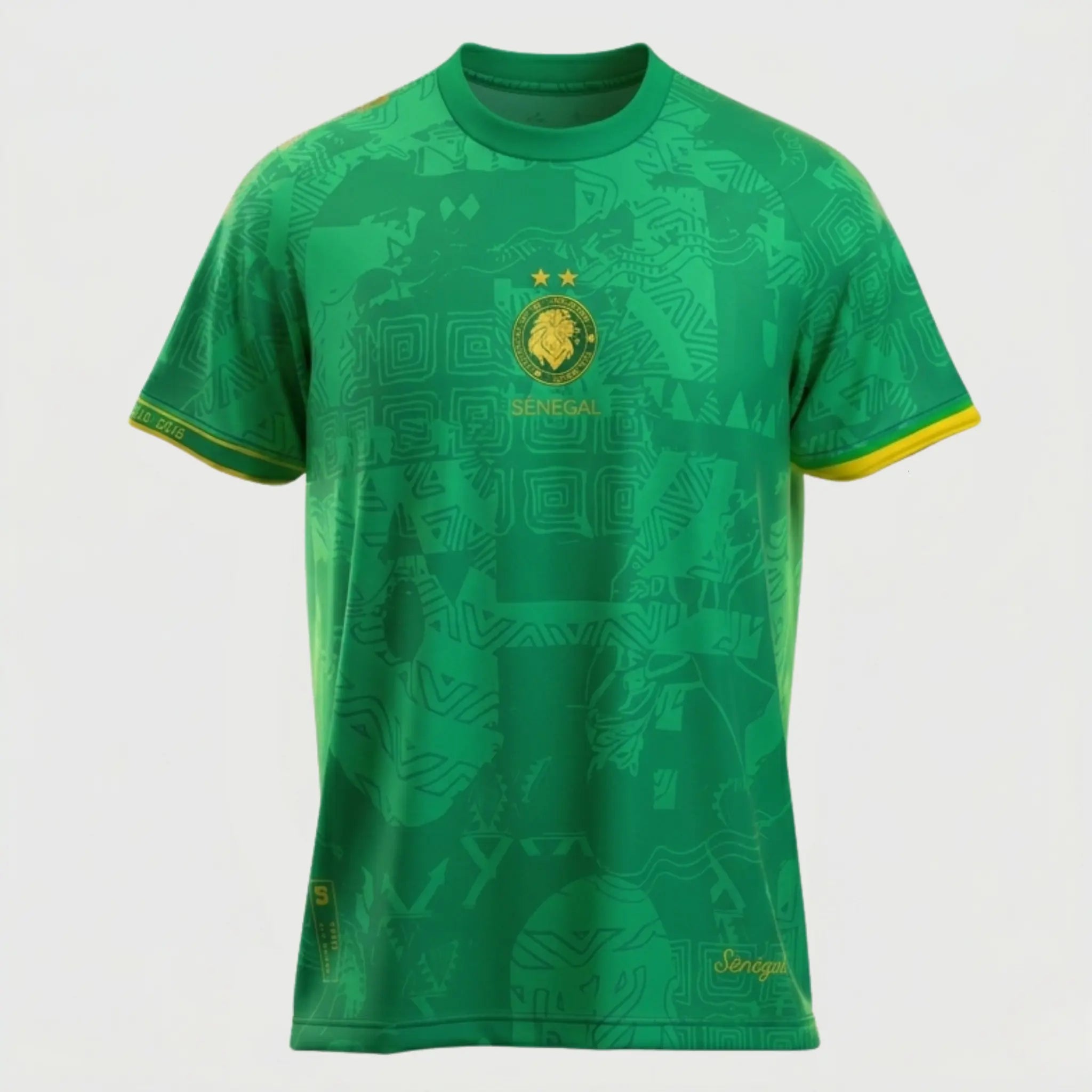
Sawa Football's exclusive jerseys, such as the custom Senegal jersey collection, feature embroideries and woven patterns directly integrated into the fabric rather than classic heat-sealed flocking. This manufacturing technique is intrinsically more resistant to repeated washes and temperature variations than surface-bonded vinyl or flex.
Summary table of temperatures and risks for flocking
| Temperature / Method | Impact on flocking | Recommendation |
|---|---|---|
| Cold water / 20°C | No impact | Ideal for bright colors |
| 30°C delicate program | No impact | Recommended reference temperature |
| 40°C delicate program | Low risk, progressive weakening | To be avoided in the long term |
| 60°C | Almost certain peeling | Absolutely forbidden |
| Tumble dryer normal program | Rapid and definitive peeling | Forbidden for all flocked jerseys |
| Tumble dryer delicate program | High risk, too much heat | Also forbidden |
| Ironing on flocking | Immediate softening of the adhesive | Never in direct contact |
FAQ
At what temperature does flocking start to peel?
Heat-sealed flocking begins to weaken from 40°C and peels significantly at 60°C. The thermosensitive adhesive softens under the effect of heat, causing the edges to lift. The tumble dryer is even more destructive as it regularly exceeds 70°C.
Can a flocked jersey be washed at 40°C without risk?
Occasionally, a wash at 40°C will not immediately destroy good quality flocking. But if repeated regularly, it gradually weakens the edges over several weeks. 30°C remains the safe temperature to preserve flocking in the long term.
How to fix flocking that is starting to peel?
If the edges begin to lift, place a thin cloth between the iron and the jersey, on the flocked side, and apply gentle heat for a few seconds with light pressure. This technique can re-adhere peeled edges if the peeling is recent. It does not work on very damaged or old flocking.
Is the delicate program at 30°C sufficient to remove sweat?
Yes, largely. Sweat mainly consists of water and salt, which dissolve easily at 30°C with a suitable detergent. High heat is not necessary to clean a sports jersey properly. Bacteria responsible for odors are eliminated from 30°C with modern detergents.
Should a laundry net be used to protect the flocking?
A laundry net reduces friction between the jersey and other clothes, which effectively protects the flocking. It is a useful additional precaution, especially if you wash several jerseys together. Combined with washing inside out and the delicate program at 30°C, it maximizes the protection of markings.
What to remember before your next wash
The rule is simple and consists of four points: 30°C maximum, delicate program, jersey turned inside out, never tumble dry. Applied systematically, these four habits allow quality flocking to withstand dozens of washes without visible peeling. The rest, detergent quality, limited spinning, drying in the shade, complements this basis without replacing the essential.