- PSG's two stars celebrate their two consecutive Champions League titles, won in 2025 and 2026.
- The first star, shaped like a golden Eiffel Tower, appeared after the triumph on May 31, 2025, against Inter Milan.
- The second was added after the May 30, 2026 victory against Arsenal, in a penalty shootout in Budapest.
- PSG only wears this star in the Champions League, never in the league or the Coupe de France.
- Counterfeit two-star jerseys are already circulating, highlighting the importance of verifying their origin.
The two stars above the Paris Saint-Germain crest represent their two consecutive European champion titles, won in 2025 and 2026. This has no relation to the number of Ligue 1 titles or an aesthetic decoration: each star represents a European Cup. Many supporters still confuse the Parisian star with those of other clubs, or think it appears on all jerseys. This is false. You will see where these two stars come from, what they change on the jersey, and how to recognize a genuine item from a copy. Let's start with their origin.
What the two stars on the PSG jersey represent
Each star corresponds to a Champions League victory. The first rewards the 2025 triumph, the second that of 2026, two titles won in a row. This double makes Paris Saint-Germain the first French club to retain its European title, an achievement only Real Madrid had managed in the modern era.
A star above a crest is a free distinction, decided by the club itself. In concrete terms, no FIFA regulation imposes or prohibits these stars: each club chooses what it wants to commemorate, here the Parisian European titles.
An Eiffel Tower-shaped star, not a classic star
The PSG star is not a simple five-pointed star. The club has opted for a stylized golden Eiffel Tower star, a nod to Paris, placed just above the logo. This graphic choice immediately distinguishes the Parisian jersey from other starred jerseys. For supporters looking for a Parisian piece with a strong design, limited edition Parisian jerseys offer exclusive interpretations of this theme, designed and drawn in France.
Where these stars come from: 2025 then 2026
The two stars tell the story of two finals. On May 31, 2025, PSG won its very first Champions League by crushing Inter Milan 5-0 in Munich. A year later, on May 30, 2026, they retained their title in Budapest against Arsenal, after a 1-1 draw and a controlled penalty shootout.
The first star, after weeks of debate
Whether or not to display a star long divided the club and its supporters. As ICI Paris Île-de-France reported in the summer of 2025, some fans demanded it in stores while others refused to see the crest turn into a display case. PSG decided: the star would be worn, but only in the competition that gave birth to it.
Giants like Real Madrid, winner of fifteen Champions Leagues, do not display any stars related to this competition. Liverpool, AC Milan or FC Barcelona don't either. PSG made the opposite choice, which makes their starred jersey immediately recognizable.
The second star, the famous back-to-back
The 2026 victory against Arsenal changes the crest. PSG officially adds a second star for its consecutive titles, following the example of Olympique de Marseille, which has worn a star since 1993. The jerseys for the 2026-2027 season are expected to permanently bear these two stars above the logo.
PSG won two Champions Leagues in two years, in 2025 and 2026, whereas it had waited more than fifty years to win the first. A collector's jersey patch, on the other hand, can easily be kept for more than ten years if well maintained.
When PSG actually wears its star
The star does not appear on all jerseys, and this is the biggest source of confusion. PSG only wears it during Champions League matches. In Ligue 1 as in the Coupe de France, the first team plays without a star above the crest.
This internal rule explains why the home jersey sold in supermarkets may not display the star, while the European version highlights it. Before buying, it is therefore better to check whether it is the league kit or the European Cup kit. To go further on future developments, our analysis of the next Parisian jersey details what changes from one season to the next.
Wears the star(s) above the logo. This is the version players wear during European evenings.
No star above the crest. This is the kit used in Ligue 1 and the Coupe de France.
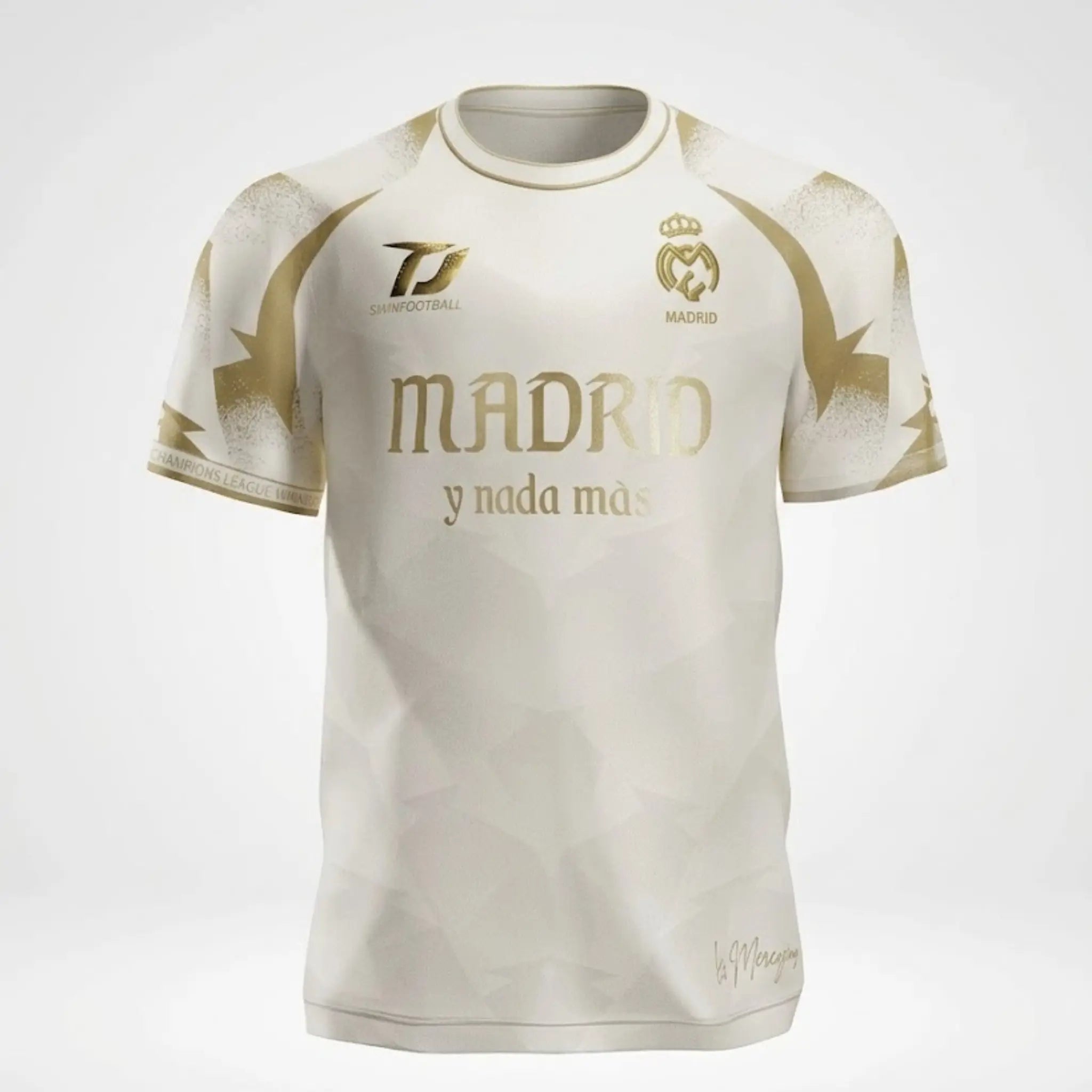
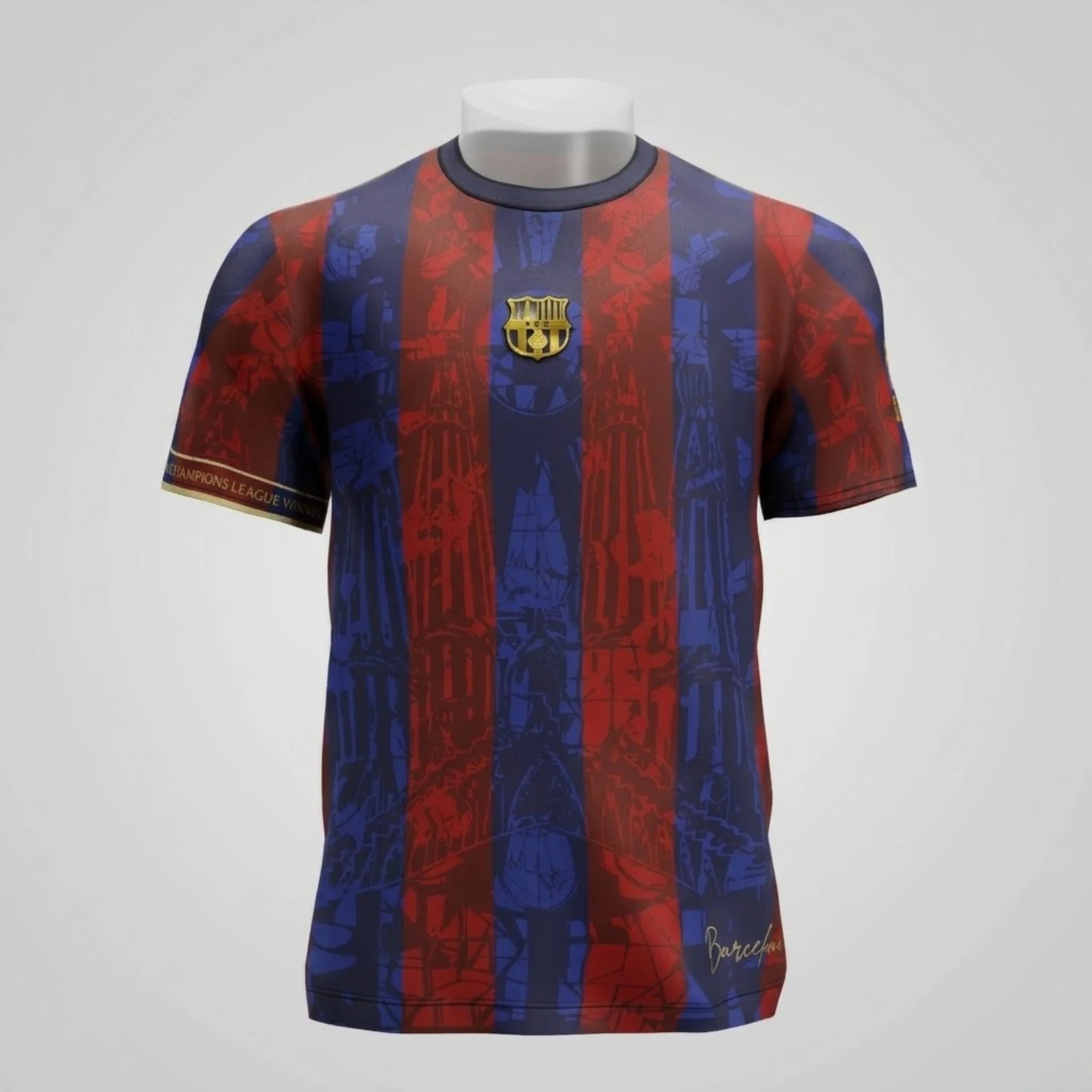
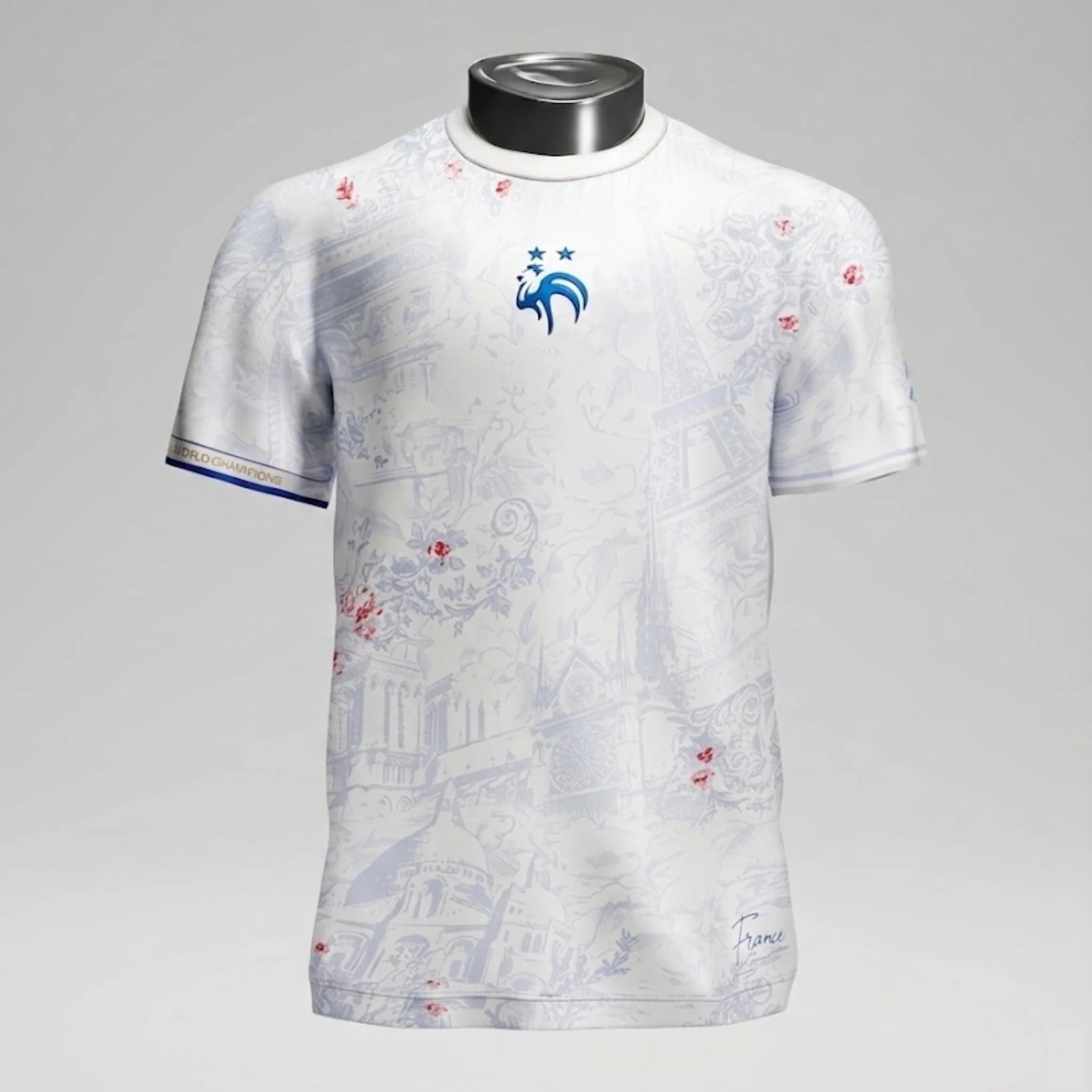
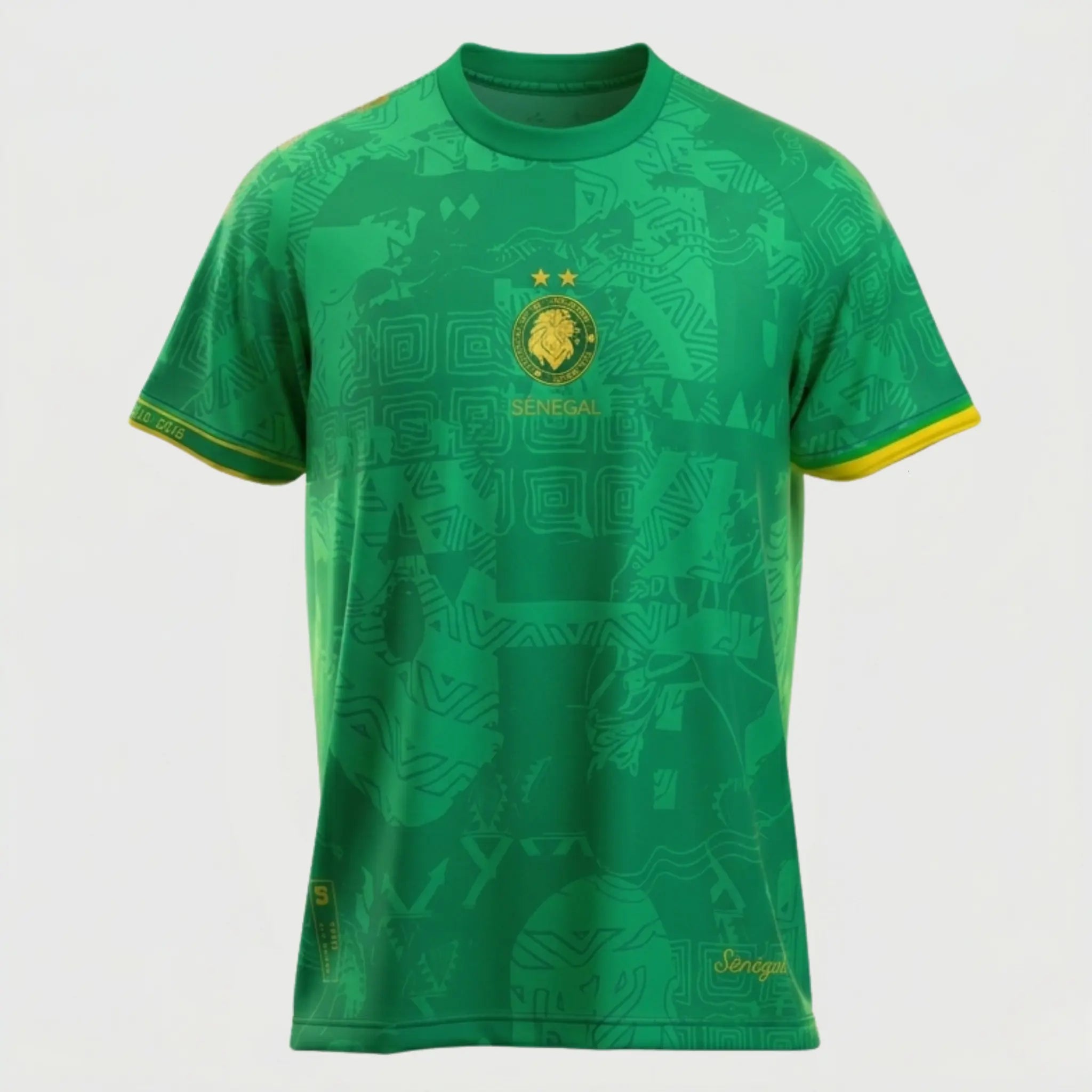
Sawa Football designs limited editions on the theme of Paris in France, unavailable elsewhere. Supporter items designed to stand out, not to imitate.
See Paris jerseys →Official jersey, replica or counterfeit: how to tell the difference
Three categories coexist and are often confused in buyers' minds. The official licensed jersey, sold for around 110 to 130 euros depending on the editions, the replica sold by third-party sites, and the pure, illegal counterfeit, which imitates the logo and stars without any authorization.
The problem is that copies of the two-star jersey began circulating even before the official sale of the 2026-2027 kit. Footy Headlines noted that counterfeiters were already offering a pirated version of the two-star jersey. Buying this kind of product means risking a poor quality item, sometimes blocked at customs.
- Prioritize clear provenance, an identifiable seller, and an assumed design, whether official or an original creation claimed as such.
- Avoid ads that copy the logo and stars identically at a discounted price, an almost certain sign of counterfeiting.
- Check the finish of the stars, seams, and flocking, which are often poorly done on copies.
There is a fourth path, more honest than copying: the supporter's jersey with an original design. A brand like Sawa Football designs its own models on the Parisian theme, without reproducing the official jersey or its stars. You don't buy an imitation, but an exclusive piece that claims its identity.
Frequently asked questions
Why does PSG have two stars on its jersey?
PSG displays two stars because they won two consecutive Champions League titles, in 2025 against Inter Milan and then in 2026 against Arsenal. Each star represents a European title, not a number of French championships.
What does the Eiffel Tower-shaped star represent?
It is the visual signature chosen by the club to symbolize its European triumph. Rather than a classic five-pointed star, PSG designed a stylized golden Eiffel Tower star, placed above the crest, as a nod to Paris.
Does PSG wear the star in Ligue 1?
No. The first team wears the star only during Champions League matches. In Ligue 1 and the Coupe de France, the jersey does not have a star above the logo, in accordance with the club's decision.
How to recognize a fake PSG jersey with a star?
Beware of an abnormally low price, an unidentifiable seller, and crude finishes on the stars, seams, or flocking. Counterfeit two-star jerseys were already circulating before the official release of the 2026-2027 kit.
Where can I find an original Parisian jersey that is not a copy?
To avoid counterfeiting, two options exist: the official store for the licensed jersey, or a creative brand like Sawa Football, which designs limited editions on the theme of Paris in France without imitating the official jersey.
Ultimately, the Parisian star tells a story of transformation: a club long frustrated in Europe that wins twice in a row and chooses to emblazon it on its chest. It's up to you what you want to wear. The official jersey to be as close as possible to the team, or an exclusive creation that speaks of Paris without copying anyone. In both cases, the true supporter's gesture is to shun counterfeits and make a clear choice.